
-
OPP. JYOTI FOUNDRY, HALOL-KALOL ROAD, HALOL - 389250
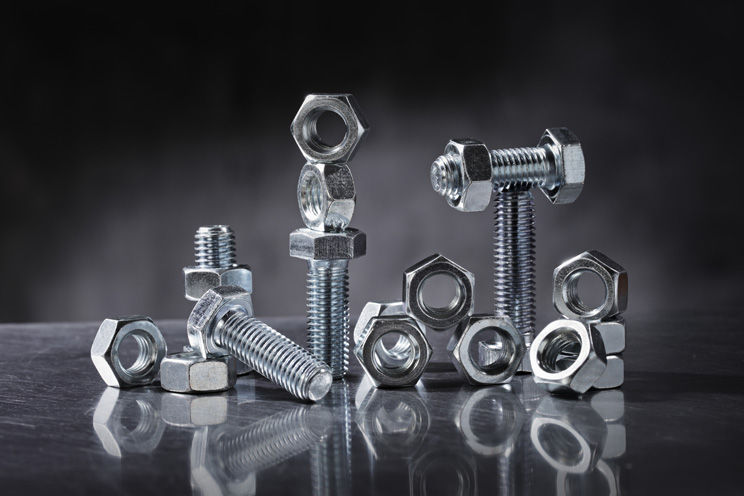
nutbolts , fastners
Nuts and bolts are perhaps the most basic components for mechanical engineers; the actual nuts and bolts of the profession (LOL). Bolts are screws with threaded cylinders and various types of heads. They are nearly always paired with a nut which has a matching threaded hole. The friction of the thread and compression work together to form the fastener.
Stainless steel Fasteners are highly alloyed iron-based family of metals with a minimum content of element chromium ranging between 10% to 11%. Unlike iron, it is an alloy that is resistant to rust, due to the inclusion of chromium. The chemical make-up of different Stainless Steel Bolts and Nuts varies with the change in the content of elements such as copper, nitrogen, aluminium, titanium, nickel, silicon, sulfur, selenium, niobium, and molybdenum. The addition of minerals in a proportion is what imparts the alloy its mechanical properties. For instance, SS Fasteners that have a chromium content of more than 12% tend to react with the oxygen present in the air and forms a self-repairing layer on its surface, thus effectively shielding the component, for example, SS bolts and nuts, from getting worn out by oxidation.
In heat-resisting steel grades such as alloy 321 Stainless Steel Nut Bolt, the metal would have stabilizers in the place of either titanium or columbium added to its chemistry. These stabilizers are why the fore mentioned fastener is well suited for use at elevated temperatures. So you can call them as high strength stainless steel bolts or high tensile stainless steel fasteners. Don't forget to ask MTC from your SS Nut Bolt manufacturers in Mumbai, it will help you to choose genuine material for fixing.